

- Seamlessly operate WebAssembly across any K8s distribution via GitOps pipeline
- Orchestrate CNCF wasmCloud across K8s with Kubernetes Custom Resource Definition (CRD)
- Wadm supercharges Cosmonic Connect Kubernetes to create new Kubernetes controller

If you’ve been following anything in the Cloud Native space right now, chances are that you’ve heard of WebAssembly (Wasm). As someone who works at a Wasm company, it should come as no surprise that I think Wasm is the future of software development. But, let’s be honest, you probably aren’t going to just dismiss Kubernetes and go all-in on the first Wasm-related project you find.
At Cosmonic, we’ve always believed it important that Wasm and wasmCloud (the soon-to-be incubating CNCF project we contribute to and help maintain) are compatible with, but not dependent on any pre-existing technology. Guided by that principle, we have long provided integrations with Kubernetes, as most people operating in the cloud native ecosystem are running in or integrated with it. What has been interesting to see is how people are choosing to integrate with it. This post outlines a couple of ways to integrate Wasm with Kubernetes, and it gives a clue as to why we’ve designed our platform to integrate with Kubernetes the way it does. With that in mind, let’s dive in!
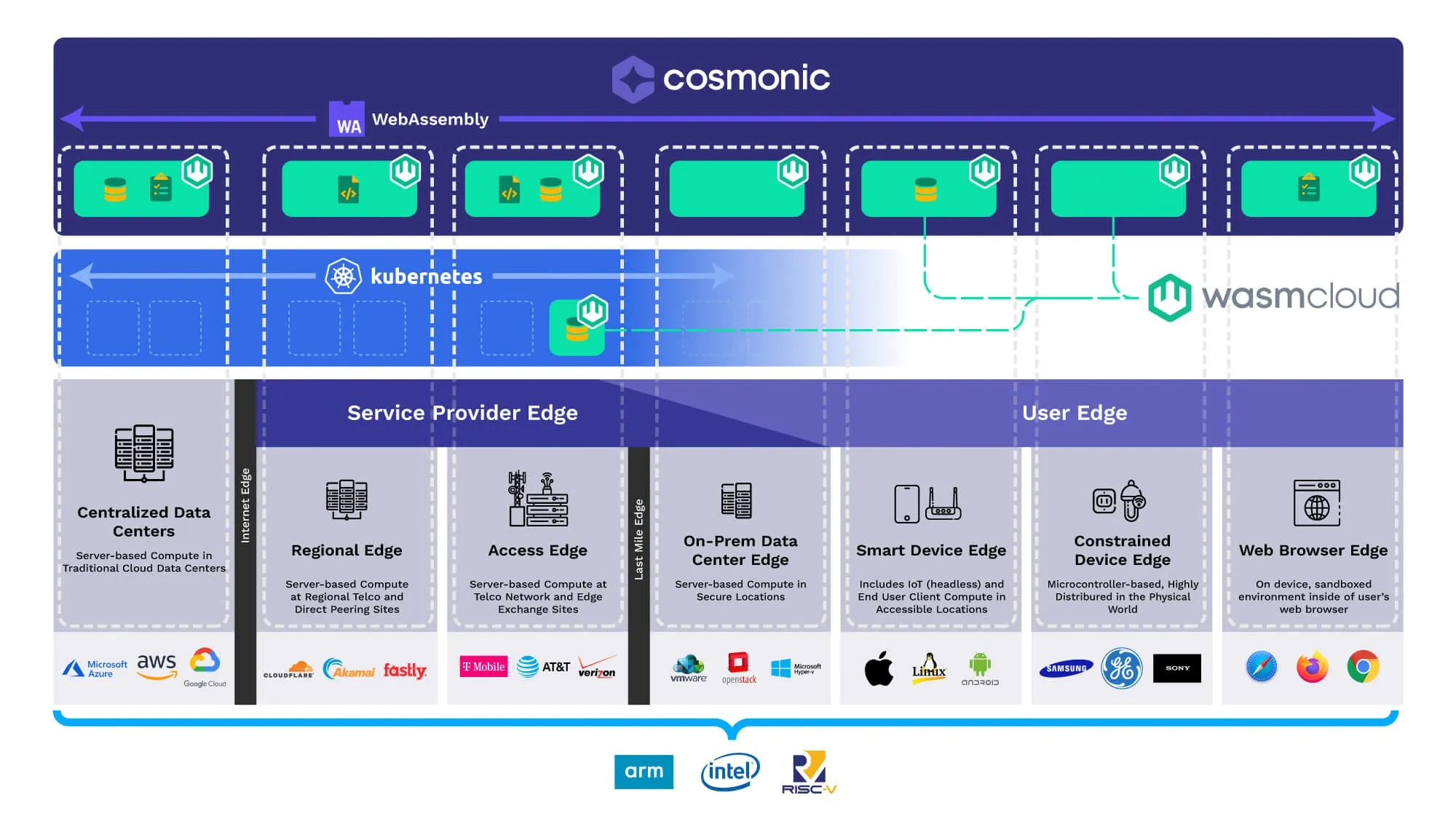
By enabling cloud native back ends to run on operational edges, Wasm allows us to deploy business logic closer to users or data, even to places Kubernetes and containers can't go.
This article first appeared in InfoWorld as part of the New Tech Forum.

Over the last 20 years, we have made huge strides in abstracting common complexities from the lives of developers. Wave after wave of innovation has driven the technology cycle. Enterprises have organized and executed around raising the delivery abstraction targeted by their developers. With each wave, we have simplified the effort, reduced the time to deliver and hastened the pace of innovation.

This post will outline the reasons why Nomad is an ideal container orchestrator for WebAssembly and wasmCloud, and how we created Netreap to run Cilium in our Nomad clusters alongside the rest of our infrastructure. In my next post, I'll walk you through how to run Cilium on a Nomad node, and how Netreap performs in practice.

At the Pasadena leg of Kubernetes Community Days (co-located with SCaLE 20x), I had the chance to talk to 100 or so Kubernetes enthusiasts, to give my perspective on WebAssembly, through the lens of a Kubernetes veteran.
From the beginning of our days developing wasmCloud, we took a stance to be compatible with today's technology without being dependent on it. So, wasmCloud needed to be able to:
WebAssembly is poised to fundamentally transform the development of both browser and server-side development.
The virtualization of the CPU, OS, and the cloud with hypervisors, containers, and Kubernetes each marked epochs of technology that ushered in emerging trends in software architecture, design, development, operation, and life cycle management.
Imagine rapid development of platform-agnostic multi-cloud, multi-edge and far-edge platforms that run at near native speeds anywhere, at any scale. Fast, secure-by-default, distributed application development that eliminates entire classes of security and portability challenges at significant cost savings.
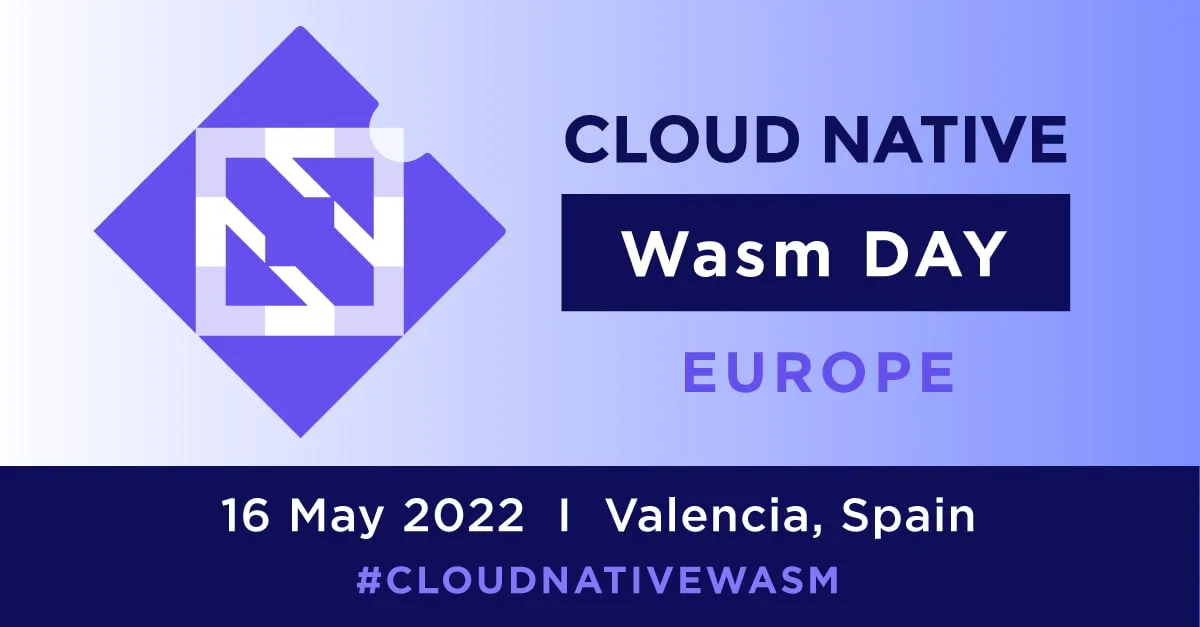
That’s the power and possibility of Cloud Native technologies and WebAssembly, a Better Together story that will take center stage in Valencia on the eve of KubeCon EU 2022.